Latest News

Hotline : +(84) 1269 861 168
Email: songnam09@gmail.com

Thứ Tư, 19 tháng 9, 2018

Factory design fascinating content

The factory design is used many times, the basic is still preserved, only change the necessary parts to suit the construction site as the water supply, power supply, fuel ... sometimes there is Change the foundation structure to suit the situation of geology, groundwater and wind load.

I. The information about factory design

Design work determines the quality of the work later, affects both the construction process, the service life, the project life, the effect and economic efficiency of the work.

For food processing plants, biotechnology it also affects the quality of finished products.

Therefore, the designers must master the basic and general requirements of the design work, knowledge of the technology and understanding of construction techniques, labor safety, and sanitation. Business, economic organization... but first must master and stick to factory design tasks throughout the factory design process.

Sapporo beer factory construction 


II. Factory design mission

Any design should have a factory design task.

The design task is the starting point, which is the basis for the design to follow, it is the result of the actual requirements of the investigation thoroughly.

Depending on the type of design, the design task is somewhat different, in general, the design task comes from the requirements of the national economic development plan and from the technical and technological improvements... In the design task, it is necessary to set out the full set of plans and specific regulations to the tasks, which generally include the following contents:

a) Reasons or design bases

b) Localization and location

c) Productivity and commodity (including major and minor) produced by the factory, sometimes recorded as total output.

d) Source of raw materials, electricity, water, and fuel

e) Specific contents must be designed

g) Time and stages of factory design

III. Design classification

There are three types of designs for the factory design:

1) Extended design and repair:

This type is intended to repair or expand the productivity of a plant or a design that is already in place, to renovate the plant, to increase or change the structure, the proportion of the item.

The factory design must carry out specific data collection on site and must take great care to make use of the works, the available details of the design and the old facility. 

2) New design

According to a state or local economic development plan.

This type is mainly based on the specific requirements and requirements of a locality to build a new factory. In designing the requirements to meet the maximum level of local conditions such as climate, land, transportation, materials, electricity and water supply, human resources ...

Typically the factory design is associated with the specific name of the locality, for example, Sai Gon Tobacco Factory, Hue Brewery.

3) Sample design (shape design):

This type is based on the most general conditions, the general assumptions. It can be built locally or locally (usually in one country).

The factory design is used many times, the basic is still preserved, only change the necessary parts to suit the construction site as the water supply, power supply, fuel ... sometimes there is Change the foundation structure to suit the situation of geology, groundwater and wind load.

For students in graduate design, due to the condition and ability to collect materials, knowledge of synthesis, time is limited, so it is usually a simple design, in addition to participation in the new design or design repair.

IV. The design phase

Factory design work usually goes through two major stages:

1. Technical survey:

Learn and document comprehensive income, clearly verify the factory design task.

A survey of economic base: Including seasonal issues, raw materials, export rates... to ensure the production process of the plant later.

Survey of technical bases: Include a general schematic drawing of the whole area, drawings of the traffic system, the layout of common water supply and drainage pipeline network, power supply network, drilling data on the geological situation. , data on water sources used (pH, hardness, alkalinity, chemical and microbial composition, groundwater level, etc.),  local materials situation, transportation costs, situation human resources, food...
  
2. Technical design: It consists of two major stages:

Preliminary design: To submit to the managing agency and the state planning committee, on that basis if newly approved to the next section.

Technical design (official): These are general parts and detailed drawings.

The technical part includes: selecting the technical diagram, selecting and calculating the equipment, layout the workshop, a layout the plant, calculate the energy, electricity, water, fuel, construction and sanitation karma, and ultimately economic accounting.

Next, on that basis, draw up construction drawings, detail structures, and assembly drawings…

==========================

Some typical industrial factories and prefabricated steel factories that Song Nam has done:

· Duyen Hai 3 extension Thermal Power Plant: Capacity 4.348 MW, 878.91 ha in Tra Vinh province, Vietnam.
· Minh Phu cold storage: 5 ha. Seafood cold storage in Hau Giang province, Vietnam.
· Sapporo Vietnam beer factory: 6.5 ha in Long An province, Vietnam.
· Wahl Clipper Vietnam: 2 ha in Long An province, Vietnam.
· Rice manufacture factory: 1 ha in Dong Thap province, Vietnam.
· Wood pellet factory: 5000 m2 in Binh Phuoc province, Vietnam.

Brand New Church Building For Lagos, Nigeria by DOS Architects

This amazing winning competition entry for new church building in Lagos, Nigeria made us think. Where did church architecture go? DOS Architects mixed newest architectural design with oldest objects and got outstanding result.


Churches were once main focal point in architecture. Years and even centuries were spent in designing and building those impressive masterpieces with incredible details. These days, with modern architecture dictating rules for every building, churches are kinda forgotten. Skyscrapers, office buildings and modern homes took all attention.


Now it's time for good old church architecture. Some time ago, there was a post about proposal for new Strasbourg cathedral by Axis Mundi in France. Quite impressive design, dictated by the rules of modern architecture. The same happened in Lagos, Nigeria. London based office, DOS Architects won in international competition for the brand new church building for Lagos.


Large and small arches are lined perfectly depending on their size making the roof and overall shape curved, dynamic, everything but boring. There is also large front glass wall which brings daylight deep into the church.

Interiors Modern Architecture: Victorian Cottage Renovation

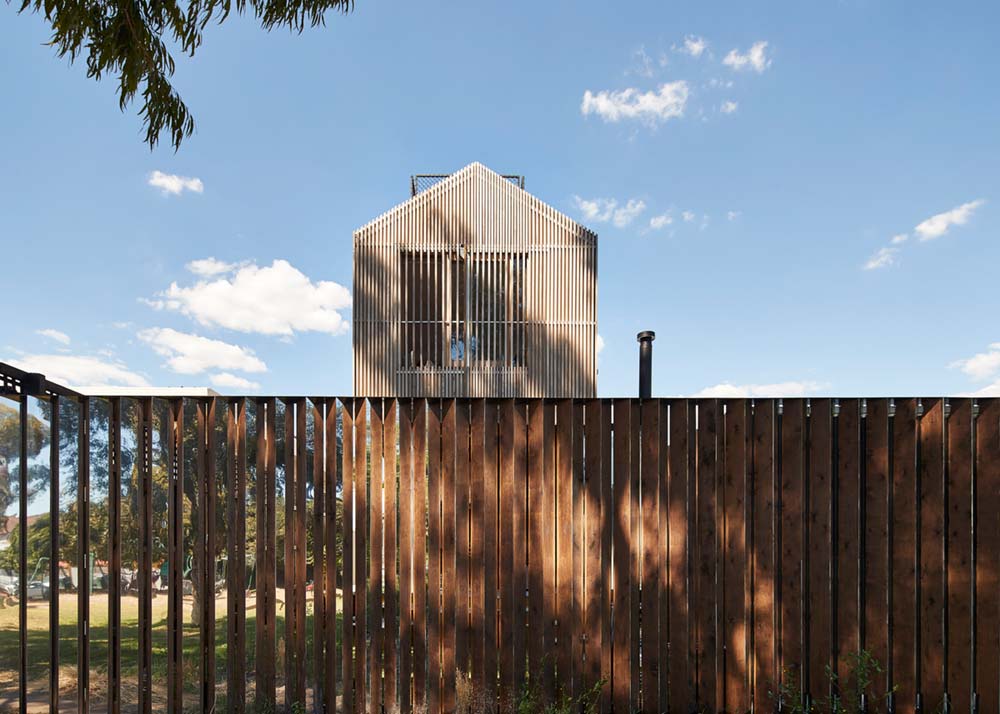
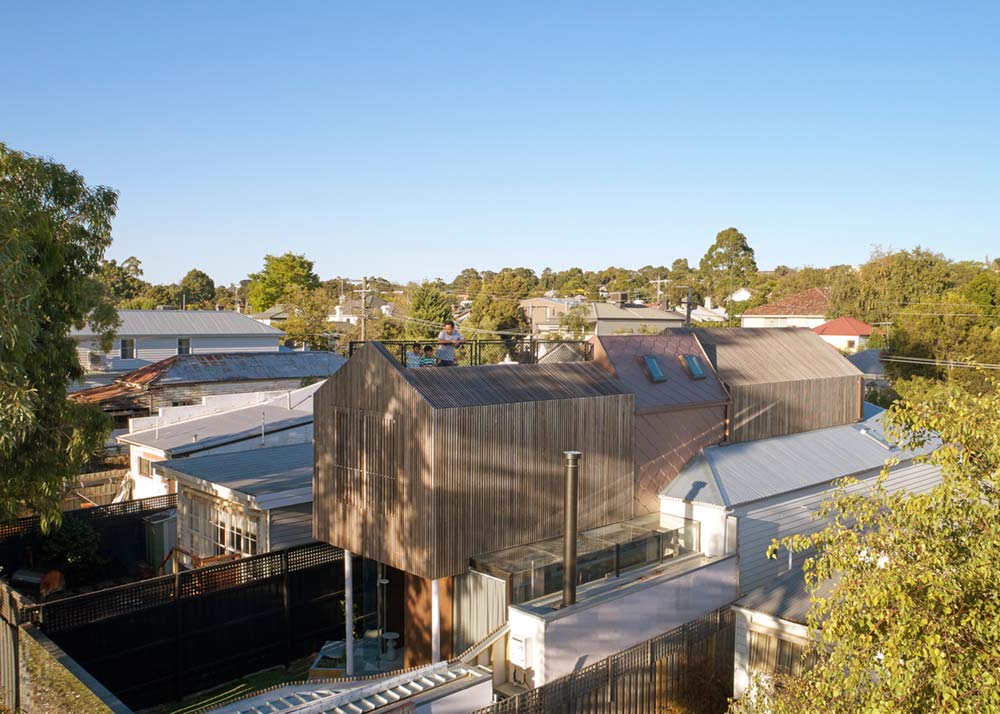
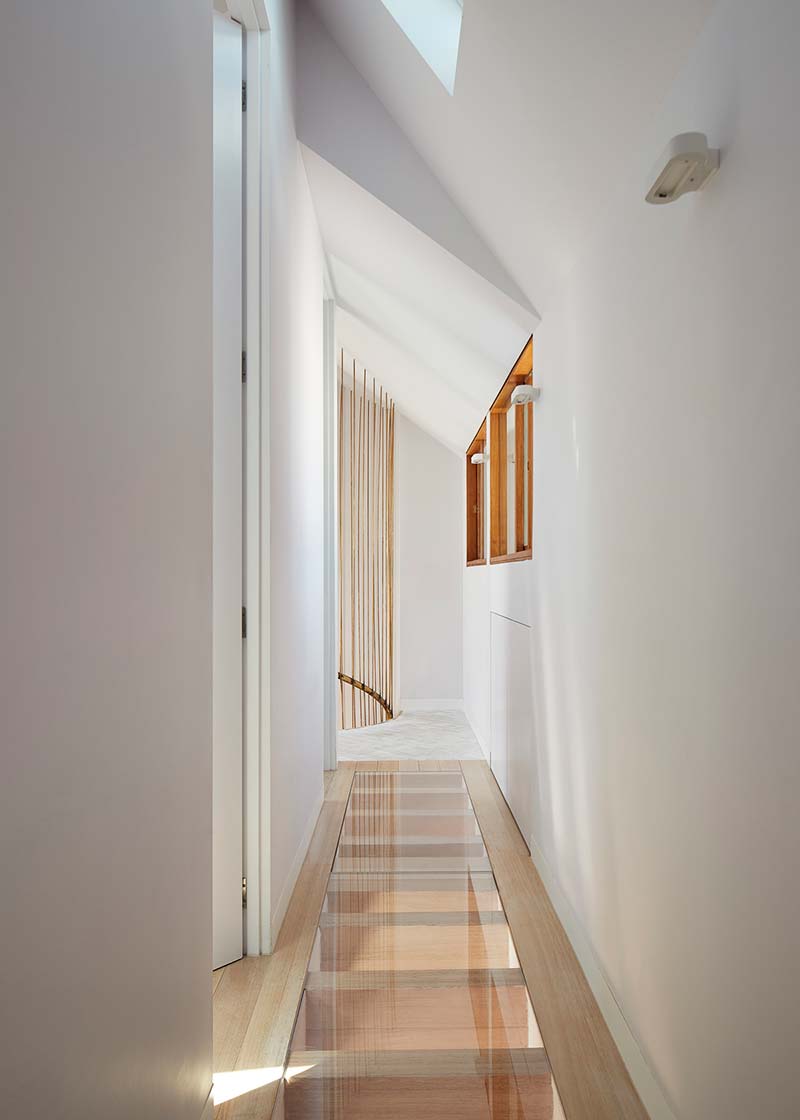
This beautiful cottage renovation replaced an 1887 Victorian era space, and turned it into a work of art. Separating each architectural element beautifully while building upon the height of this cottage, this elongated living space is equal parts fun and functional – both inside and out.


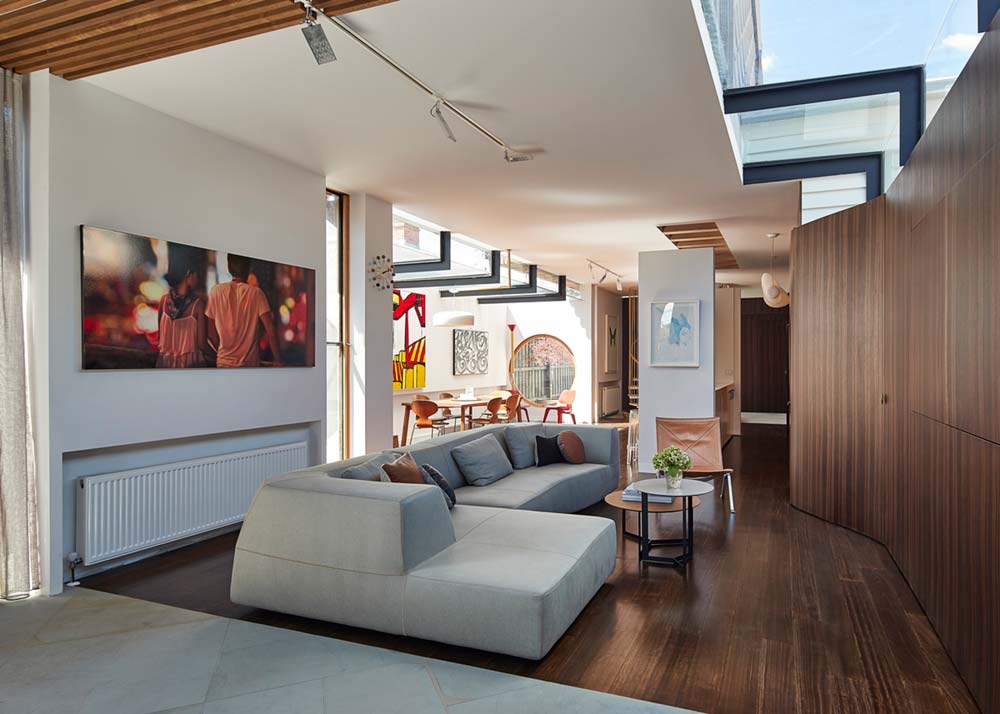
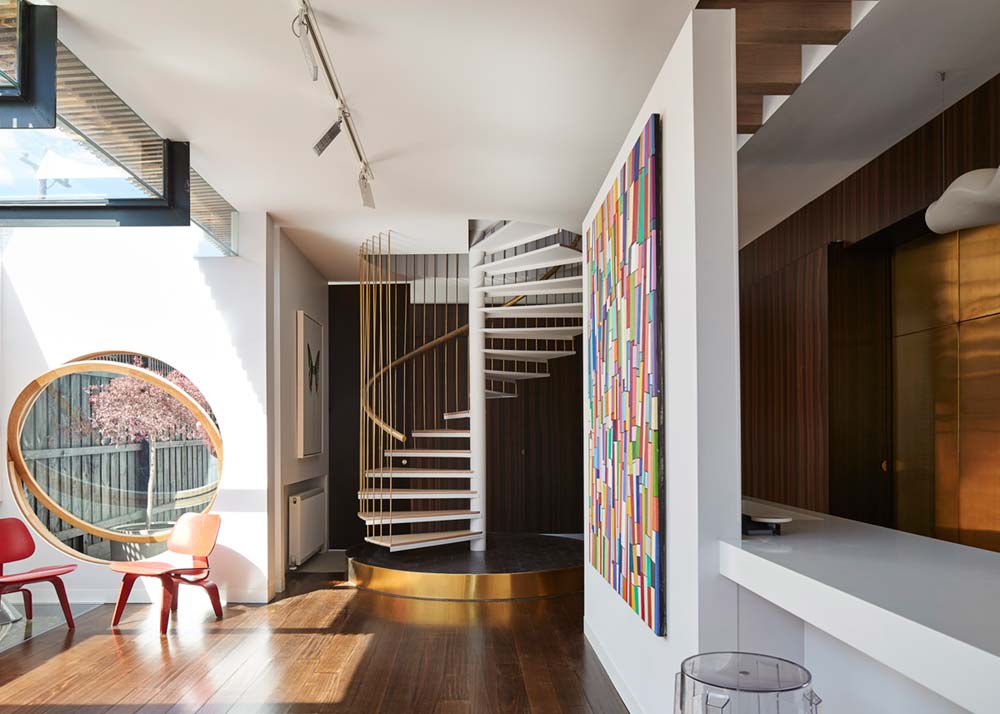
Operating as a showcase home for the client, which is actually the architect and his family, this original Victorian cottage is an array of ceiling and window slats, a spiral staircase that brings you onto the next floor where the bedroom and bathroom exist, and a melding of mirrors and wood – all coming together in delicious unison without compromise.
modern cottage renovation side - Victorian Cottage Renovation
modern cottage renovation top view - Victorian Cottage Renovation
Inside, the upper floor is suspended, and a glass walkway can be found floating above the original space, clad in vertical batten timber, which creates an even more heightened illusion from the outside. While natural elements, such as the gum tree in the backyard, cast shadows into the home at various points of the day, adding dimension to the interior.
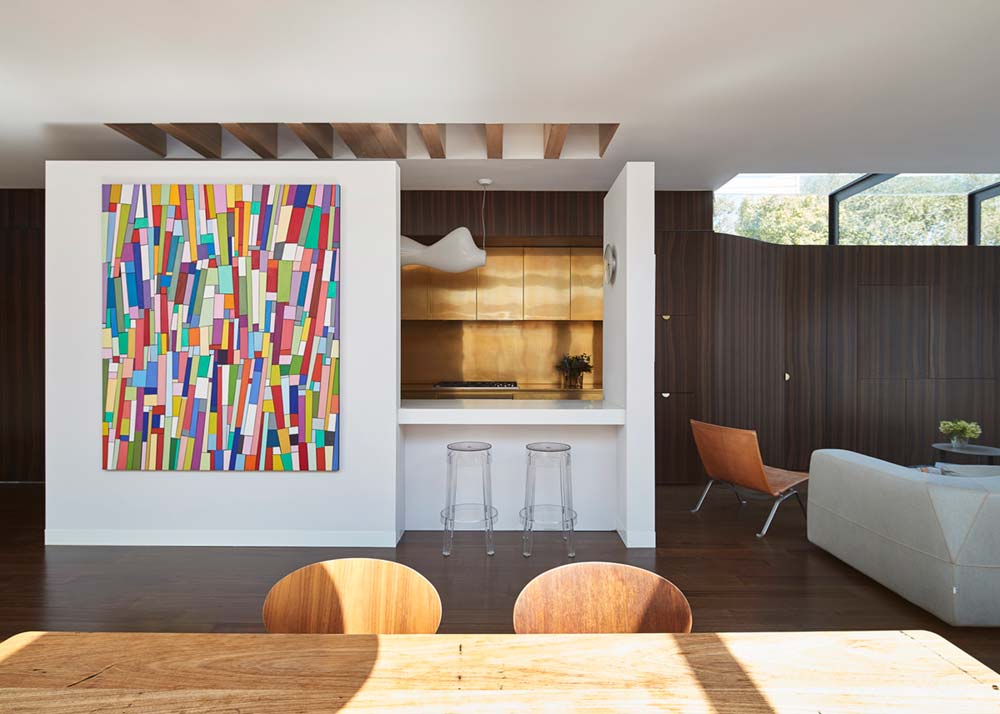
modern cottage design living - Victorian Cottage Renovation
modern cottage design spiral staircase - Victorian Cottage Renovation
modern cottage design glass floor - Victorian Cottage Renovation
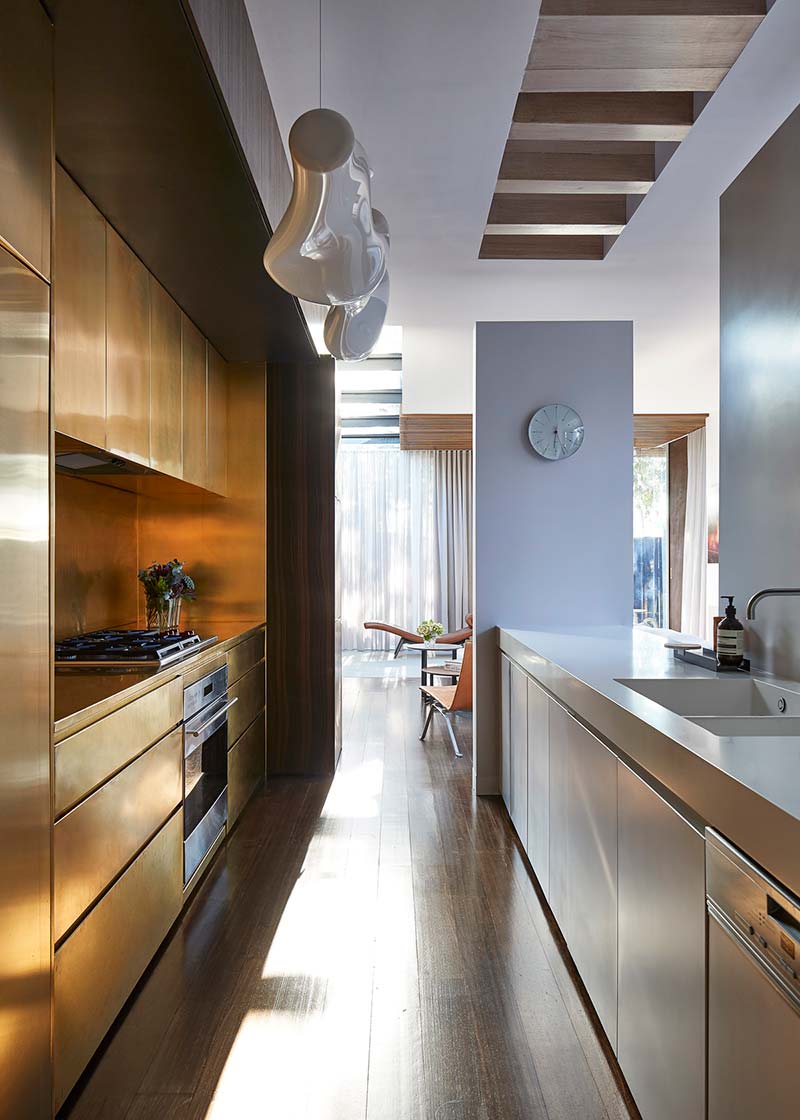
A peek-a-boo style kitchen is tucked next to the living and dining space, half hidden by a wall cloaked with colorful art and oak cabinetry within. While the living room looks upon a wooden wall, creating a curved focal point that bends with the home beautifully.
modern cottage kitchen design 1 - Victorian Cottage Renovation
modern cottage kitchen design 2 - Victorian Cottage Renovation
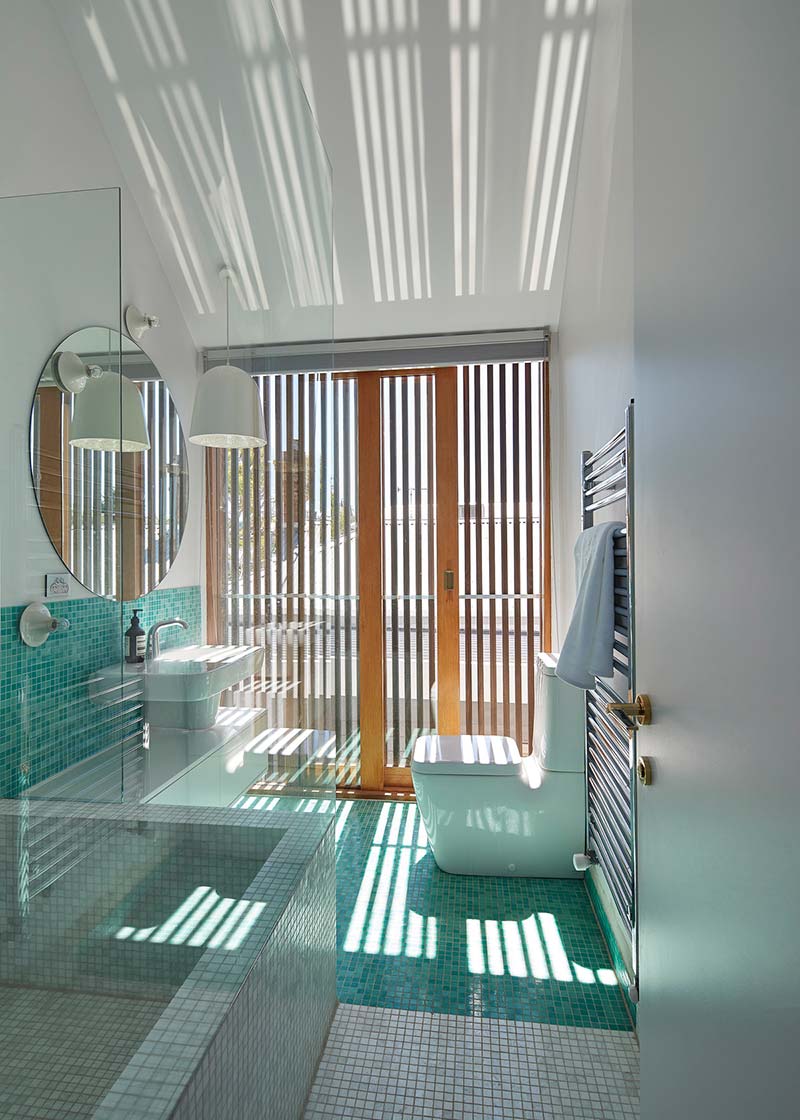
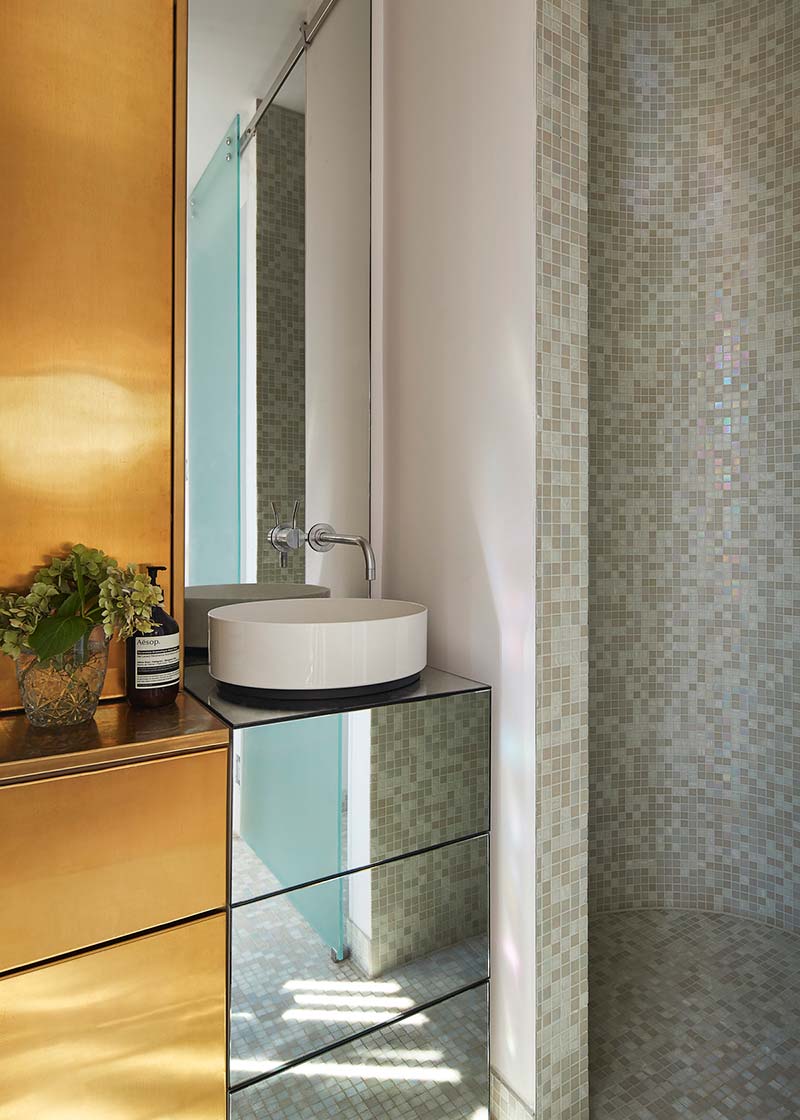
Meanwhile, the bathroom above is bathed in turquoise and the aforementioned slats and shadows, making it truly seem like you are swimming in an idyllic design concept, which is the essence of this home throughout.

modern cottage bathroom design - Victorian Cottage Renovation
modern cottage design round shower - Victorian Cottage Renovation

Your Future Hotel Room Might Be A Solar-Powered Vehicle

Remember when all the gadgets featured in the Back to the Future universe seemed totally far-fetched? But over 30 years later, here we are with our video calling devices and fingerprint recognition technology that defied what we thought was conceivable.


This hotel concept called the Autonomous Travel Suite was just named as a finalist in this year's Radical Innovation Awards, which celebrates futuristic ideas that demonstrate the hotel industry's potential. Developed by L.A.-based Aprilli Design Studio, this micro stay would provide door-to-door transportation to a traveler's desired destination—removing a flight from the equation.

Case in point: No one knows what the technology of the future is going to look like until it's introduced into the market. So, if you read this headline and thought, A hotel room-meets-car? Impossible!, don't dismiss the idea just yet.

And it doesn't hurt that the units would run on solar-powered energy, so the production of these vehicles supports a more sustainable future ahead.


(Image credit: Radical Innovation Award)

These docking areas are where the suite would essentially park, becoming part of a larger structure with expected hotel amenities like a gym, meeting rooms, and dining facilities. And once they've completed their stay, the units would deliver them right back onto their doorstep.

Here's how it works: A traveler can book a suite online or on the mobile app for a determined time. Then, the unit would arrive at the selected pick-up spot and bring the guest to a local Autonomous Hotel docking facility at the desired destination.

Regardless of whether or not the Autonomous Travel Suite is chosen as the winner, we might be looking at the hotel model of the future. Never say never!

What is Construction Project Management?

When you’re managing a construction project, it helps to understand the methods and activities of construction project management. Construction projects are highly structured endeavors with a lot of moving parts and people, and there are a wide variety of types of construction projects. There are also multiple phases to manage in every construction project, from design to planning to scheduling to the build itself.


IJC AROMA
tu-van-giam-sat

Construction project management requires technique and tools in order to be successful. In this growing field, it’s important to keep up with your management skills to stay competitive. So, whether you’re already familiar with managing construction projects or are just exploring the field, our quick guide has all the answers you need.

In brief, construction project management is the process of managing construction projects. But when you’re talking about managing a construction project in comparison to other types of projects, the distinction is mostly that construction is mission-based. That means that the project’s organization ends with the end of the project build.

While generally project management is defined as managing resources over the life cycle of a project through various tools and methodologies to control scope, cost, time, quality, etc, when working in the construction industry your outlook must be broader. It usually includes a wider variety of constraints to consider specific to design, build and construction projects, and can interact with a variety of different disciplines in the lifetime of a project, from architecture to engineering to public works to city planning.

There are a variety of different types of construction projects, depending on the different construction sectors. There are two sectors in construction: residential and commercial. Depending on the sector, there can be up to four different types of projects:

  • Residential home building and renovation
  • Heavy industrial construction
  • Commercial and institutional construction
  • Engineering construction

That means there are a wide variety of types of construction projects that require construction management in order to be successful. Construction management might be required for a simple home to a large bridge, from engineering a dam build to an airport seismic retrofit project. Construction project manager, then, manage the beginning and end of a project build, often managing on-site to ensure the safe, successful construction.

Retour à L’École: A Barcelona French School Gets a Contemporary Classmate

Spanish architecture firm b720 Fermín Vázquez Arquitectos designs a modern addition to Lycée Français Maternelle, a Barcelona French school, that adds ample outdoor space, new classrooms and a splash of colour.


In Barcelona, pre-school students at Lycée Français Maternelle, an international French school, have something exciting to return to: a bright contemporary addition by Madrid / Barcelona architecture firm b720 Fermín Vázquez Arquitectos.
The exterior of Barcelona French School Lycée Français Maternelle b720 Fermín Vázquez Arquitectos
Founded in 1924, the school is operated by the Agency for French Education Abroad. As the institution grew, it struggled to accommodate its rising number of students – and like many schools, relied on temporary buildings to supplement the original academic facilities. So it elected to build a more permanent solution, and the new kid in class is a 3,400-square-metre addition that, in dialogue with the pre-existing buildings, creates an ample courtyard.
Recess, we imagine, became a lot more fun.
Students play hopscotch at Barcelona French School Lycée Français Maternelle b720 Fermín Vázquez Arquitectos
The playground at Barcelona French School Lycée Français Maternelle b720 Fermín Vázquez Arquitectos
From afar, the curvilinear building is defined by a colourful slatted envelope, which runs around the new building’s perimeter. The steel slats were chosen for their efficiency and durability – they provide insulation and protection from the sun. But, as the firm notes, it also adds an element of playfulness. “The chromatic and proportional [elements of the envelope] are the result of a useful and continuous dialogue with the client, who have a clear will of including colour in the project,” says the firm.
The steel envelope sits atop thermowood cladding by Lunawood, which adds dimensional stability, all-weather resistance and thermal insulation to the building.
The media library Barcelona French School Lycée Français Maternelle b720 Fermín Vázquez Arquitectos
The addition’s squircular form was a nod to Lycée Français Maternelle’s original building. All the classrooms are now contained in the new building – the original early 20th-century villa is now used for administration, a media library (above) and music facilities – which gestures to its neighbour with a ground-level porch and second-storey bridge.
The site plan for Barcelona French School Lycée Français Maternelle b720 Fermín Vázquez Arquitectos
For b720, establishing this relationship was important, but adding contemporaneity was also a priority. “The formal resolution of the new building evokes the volumetric shapes of the villas through the rounding of its corners establishing a formal relationship without necessarily subordinating itself to a historicist imitation,” the firm says.
The courtyard at Barcelona French School Lycée Français Maternelle b720 Fermín Vázquez Arquitectos
b720, whose three-person design team consists of Peco Mulet, Gemma Ojea, Javier Artieda, responded to the site’s irregular, sloping shape by creating a four-level building with ample outdoor spaces and shading from the elements. A basement area, visible at the image atop this page, creates an outdoor waiting area for families and children.
The site plan for Barcelona French School Lycée Français Maternelle b720 Fermín Vázquez Arquitectos
A set of stairs (or ramp) rises to its ground level, which lines the playground / garden area with light-filled classrooms. From here, the building steps back, simultaneously creating shaded areas on the ground level and a generous terrace on the second storey. The final two storeys contain classrooms, with the building topping out with a rooftop garden. In the project drawings above, the rooftop is demarcated for study of flora and fauna – depicted adorably with a snail.
The hallways at Barcelona French School Lycée Français Maternelle b720 Fermín Vázquez Arquitectos
Wayfinding at Barcelona French School Lycée Français Maternelle b720 Fermín Vázquez Arquitectos
Inside, the bold oranges and yellows of Lycée Français Maternelle’s steel envelope are repeated, ensuring visual consistency. These colours can be found in flooring and wayfinding elements; the pale Lunawood palette is repeated here, too, in the building’s ceilings, which are lit by LED strips.
The result, the firm says, is a “visual and programmatic relationship” that pays homage to site’s history – while infusing a liberal amount of pre-school playfulness. Welcome back, students.
A nighttime shot at Barcelona French School Lycée Français Maternelle b720 Fermín Vázquez Arquitectos

Why do we need Investment Consultancy Services

Normally Investment consultancy companies will be fallen into four main categories: Financial planner, Money managers, Financial advisors, and Registered representatives.

An investment consultancy services provide various kind of services to their investors, including product investments, advisory assistant, and planning. With the help from Investment consultancy companies, it will be easier for investors to achieve their financial goals and also fulfill their needs because all the hard works on planning and building strategies will be taken care of by the agency.


Investment Consultancy companies are very helpful for investors

1. How does it work?

An Investment Consultancy company will work closely with their clients in order to create an investment strategy and build up a long-term working relationship with their investors. Their role is to monitor the investments from clients in an Active way and frequently working with clients as the financial objectives of each company is always change from time to time in order to match their targets. Investment consultancy companies mostly receive their payment through charging fees, sometime might be included with a commission.

2. What kind of Qualifications and Licensing are required for an Investment Consultancy company?

Normally in the US, most of Investment Consultancy companies are licensed by the Financial Industry Regulatory Authority (FINRA), this is an independent 3rd party. However, all processes and activities are still being under the monitoring of the Securities and Exchange Commission (SEC). Investment Consultancy companies will normally hire their agents who have a background in finance, accounting, business, etc.

3. How do we categorize Investment Consultancy companies?

Normally Investment consultancy companies will be fallen into four main categories: Financial planner, Money managers, Financial advisors, and Registered representatives. 

Here are the details about their functionalities:

• Financial planner: Investment consultancy companies who only assist their clients to manage personal finances, no further assist outside finance will be provided by them. To be qualified as a Financial Planner, you will need to acquire a few certificates like Certified Public Accountant (CPA), Certified Financial Planner (CFP), etc.

• Money managers: this is another type of Investment consultancy company; they are the ones who make investment decisions on behalf of their clients. Money managers are normally referred to as buy-side firms who work for asset fund managers, or management firms, or investment funds.

• Financial advisors: An Investment consultancy company who provide both general and personalized financial advice. Normally they have Series 65 or 66 license and they get their reward through charging fees.

• Registered representatives: A company who earn money via commission. They are hired to sell insurance products stocks, investments, etc. Legal registered representatives are normally holding a Series 6 or Series 7 license.

4. So how to choose a correct Investment consultancy company?

Before deciding to hire a service from an Investment Consultancy company, here are few things that you will need to do:
  • Perform a research about the Investment Consultancy company that you’re about to hire. 
  • Are they under any business investigation at the moment? Any criminal record?
  • Do they have all the required licenses/ certificates? 
  • Conduct a meeting with them, face to face, explain your plan and try to see if they understand all of your financial goals or not. 
  • Do remember to discuss about fees and commissions.

Summary: 

Investment Consultancy company provides financial services that might be very useful for investors, help them to achieve their goals and profits faster and more efficient. We hope our article today will give you some ideas for your future investment plans.

Architecture is the science of creating the extraordinary out of the ordinary

Inside the installation, which Bjarke Ingels and his firm created for the 2016 Serpentine pavilion, are 10 stunning models of the Danish firm’s completed and upcoming projects around the world.


Architecture is the science of creating the extraordinary out of the ordinary,” says Bjarke Ingels. The Danish architect is in Toronto to officially open Unzipped, the installation his firm, BIG, created for the 2016 Serpentine Pavilion. The installation’s patron is Ian Gillespie and Westbank, the developer behind BIG’s King Street West condo project, called Westbank King Street. It was recently given the green light to be constructed on the same site as the installation.


And so, the opening of Unzipped coincides with the excitement surrounding the possibilities that have been unleashed with Westbank King Street, which is destined to permanently transform the face of King Street West and raise the bar for condo development across the city. And although Unzipped is temporary (it will be open until November, then tour New York, Shanghai and Seattle before taking up a permanent spot in front of another Westbank project in Vancouver), it speaks to BIG’s ambition to inspire at every scale of architecture.


Assembled with 1,800 fibreglass frames, the installation was designed for prefabrication. “We really thought of it as a piece of furniture. Essentially, it’s a shelf pulled apart, unzipped to create this space within it,” Ingels explains. He was informed by the work of the Uruguayan engineer Eladio Dieste, who made stable structures with undulating walls. While the construction of the space is rational and premeditated, its modularity is what makes it take on different appearances from whichever way you view it – seeming flat and rectangular face on, bulging and multiplanar from an oblique angle, opaque or transparent in various directions. This is what Ingels means about the ordinary becoming extraordinary.


But the aesthetic of the piece also speaks to a recurring theme in Ingels’ work – the particular shape of the square tube as a central idea that can be seen in 8 House, Vancouver House and the upcoming Westbank King Street, which is premised on Moshe Safdie’s iconic Habitat 67 in Montreal (and is a joint venture by Westbank and Allied). It will be integrated into King Street West – a strip with a fascinating mix of laneways, back lots, secret throughways and gardens – as a dynamic, multi-peak, pixelated mass. And it will bring trees into the vertical dimension. Ingels spent time with Stefano Boeri to explore the Italian architect’s paradigm-shifting Bosco Verticale towers in Milan, and in his own projects, from 8 House in Copehagen to an upcoming Singapore development with Carlo Ratti, he has also introduced plant life into big projects.


“As an architect, you have certain things you return to because you’re not done with them yet. It’s not a lack of imagination – there’s more to be discovered. Eventually, you do get satiated, but in that process you will have noticed other paths you can spend more energy on exploring,” Ingels says. Plus, he’s intent on making the idea of the home legible in all of his residential projects. “Rather than making an arbitrary architecture – rather than try to hide that we’re making homes – let’s make it about the homes. For a Vancouver House or King Street resident, you’ll be able to say, I’m not just some random co-ordinate box, I’m that home with that tree.”

Ian Gillespie, who is working with Ingels on nine collaborations since their relationship began in 2010 with Vancouver House, concurs. “As urbanization accelerates,” he asks, “how do you create the conditions for people to have this individuality? King Street does that really well.

Ingels connects the work he’s doing in the residential realm with his most exciting public projects under way. These include the Amager Bakke power plant in Copenhagen, which doubles as a ski slope, and the revitalization of New York’s coastline, which he’s christened Humanhatten. Beyond their landmarks, Ingels argues, cities should also inspire with the “ordinary” places we inhabit on a daily basis, from our homes to our utilities.


“We’re interested in taking all the things that have been strictly ‘utility’ and discarded and integrating them as a part of our world. To re-explore the potential of these formerly purely utilitarian projects that occupy a lot of resources and real estate and to see if we can impregnate these programs with positive social benefits – what we call social infrastructure.”

To truly understand the scope of this ambition, the exhibition inside Unzipped, featuring 10 fantastic projects, is the first step.

AZURE MAGAZINE


Head Office:

98 Tran Quang Khai Street, Tan Dinh Ward, District 1, Ho Chi Minh City

Website:

www.songnam.net